
Exoplanet research for high school students
Use telescope images to measure when a planet crosses its star. Work online on your own schedule, or bring a research project to your astronomy club.
Start your first project Start a school or club project


Choose a research project
Analyze a transit from home
Pick one night of public data. Measure the dip in starlight in your browser, even if you’ve never used a telescope.
Work toward an astronomy paper
Contribute a light curve that other researchers can use, or study a question of your own across several observing nights.
Start research at your school or club
Starting a club yourself or planning a class project? Get in touch about a first observing night for your group to analyze.
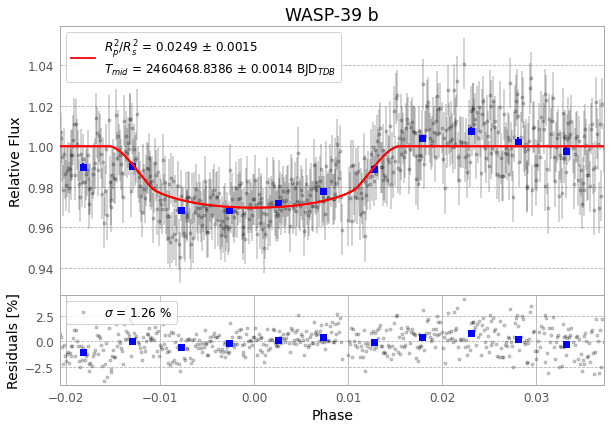
A submitted observation
WASP-39 b on 7 June 2024
Each point on this plot comes from an observation of the star. The 558 measurements show the dip as WASP-39 b crossed in front of it.
Access to telescope data
Use public telescope data or upload observations of your own. You can start without owning a telescope.
Data analysis and submission
Review frames and use EXOTIC to produce light curves in our browser workspace. After reviewing your results, submit them to AAVSO for astronomers to use in their research.
Support our work
Donations support access to astronomy and exoplanet research for high-school students.
Donate